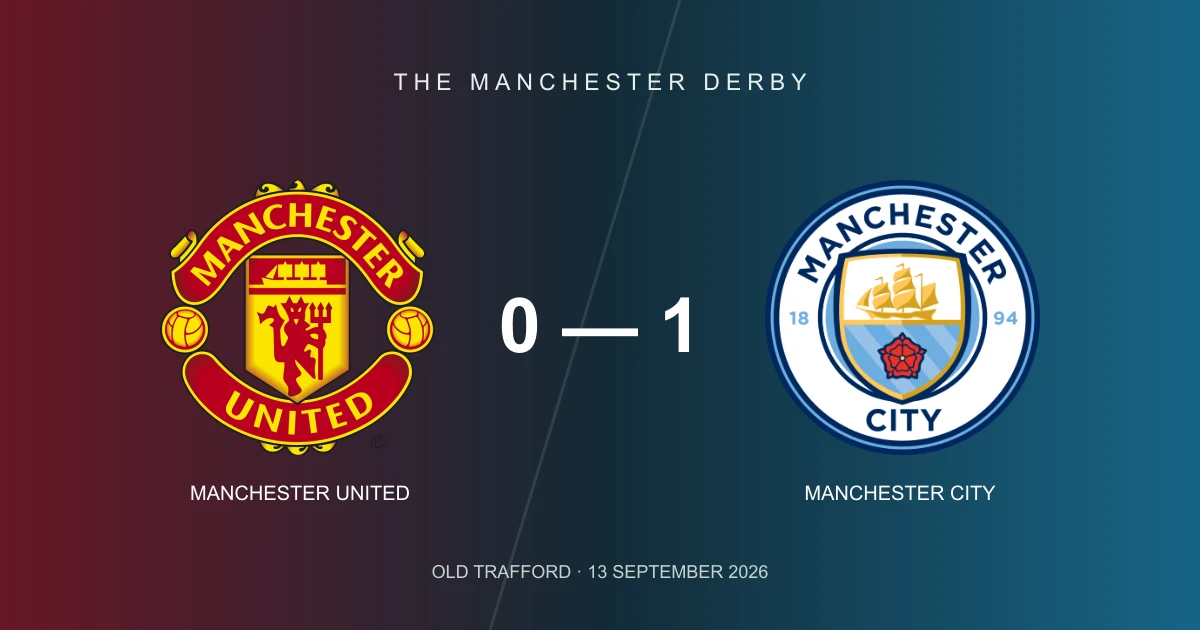
Manchester City won 1–0 at Manchester United on 13 September, with Erling Haaland scoring after Phil Foden’s first-half dismissal. City’s official report and Opta Analyst agree on the result, leaving the visitors with four wins from their opening four Premier League matches under Enzo Maresca.
The result and the debate around the winner need to be read together. A scoreline records what stood at full-time; the decisions that produced it can still deserve scrutiny afterwards. This report therefore includes the later development rather than stopping with the winning club’s account.
A dismissal, then the decisive finish
Opta places Foden’s red card in the 23rd minute, following his reaction to Bruno Fernandes. Haaland scored on the hour from a deflected Josko Gvardiol delivery. The goal was initially ruled out before a VAR review reversed that decision.
Opta’s report identifies Enzo Fernández’s position and attempted involvement in the delivery as the source of United’s objection. It also records efforts against the woodwork from Marcus Rashford and Kobbie Mainoo, plus a late Gianluigi Donnarumma save from Bryan Mbeumo.
NBC Sports subsequently reported that Pro Ref acknowledged a judgement error in awarding the winner.
That acknowledgement is an important qualification to the match account. It should not disappear behind a celebratory headline, nor should discussion of the decision erase the rest of the football. Readers looking for the wider programme can find it in our football section.
How City describe their response
City’s report says the team reorganised into a 4–4–1 and spent more than 67 minutes with a numerical disadvantage. The club credits its defensive performance for limiting United to three shots on target. It also identifies Haaland’s strike as his ninth goal in Premier League Manchester derbies.
These are useful details, but the source is one of the competing clubs. We use it for the reported result and team context, while checking the key sequence against Opta’s separate account. Descriptions of resolve and superiority are assessments, rather than additional match events.
What the game suggests — and what it cannot prove
Our reading is that defensive organisation and finishing efficiency provide a better way to discuss this contest than possession of an extra player alone. Having eleven players against ten creates an opportunity; it does not automatically produce a clear chance or a goal. The reported saves and woodwork incidents also show why describing United as entirely without threat would be too strong.
Equally, one derby cannot establish which side will finish higher across a full league season. It can inform that discussion, but injuries, future opponents and later performances remain outside this match report. The sensible distinction is between a completed result and a forecast that still needs evidence.
Frequently asked questions
Who scored the only goal?
Haaland scored in the 60th minute. Both the club account and Opta record United 0–1 City as the final score.
Why were City playing with ten men?
Foden was dismissed during the first half. Opta dates the incident to the 23rd minute.
Where can I check the accounts?
The source list below includes the club report, Opta’s match account and the later follow-up. They serve different purposes: match context, independent reporting and the subsequent update.